The conventions of an opening sequence include:
- Distribution and production company - if the audience enjoys the film they see, they will refer to other works created or distributed by these companies, thus why their names appear in the opening credits
- Cast - usually, the top billing actors are listed first in order to catch the audience's attention quickly; sometimes, one actor can attract an audience member to see a film
- Director(s)
- Title of the show/film - this is usually a heavy implication as to what the film is going to be about; for instance, Friday the 13th already has horror connotations due to the superstition surrounding the date
- Executive producer(s)
 |
| Left to right: distribution company, cast, title, executive producers, directors, production company (click here for the website used as a reference) |
 |
| Stranger Things |
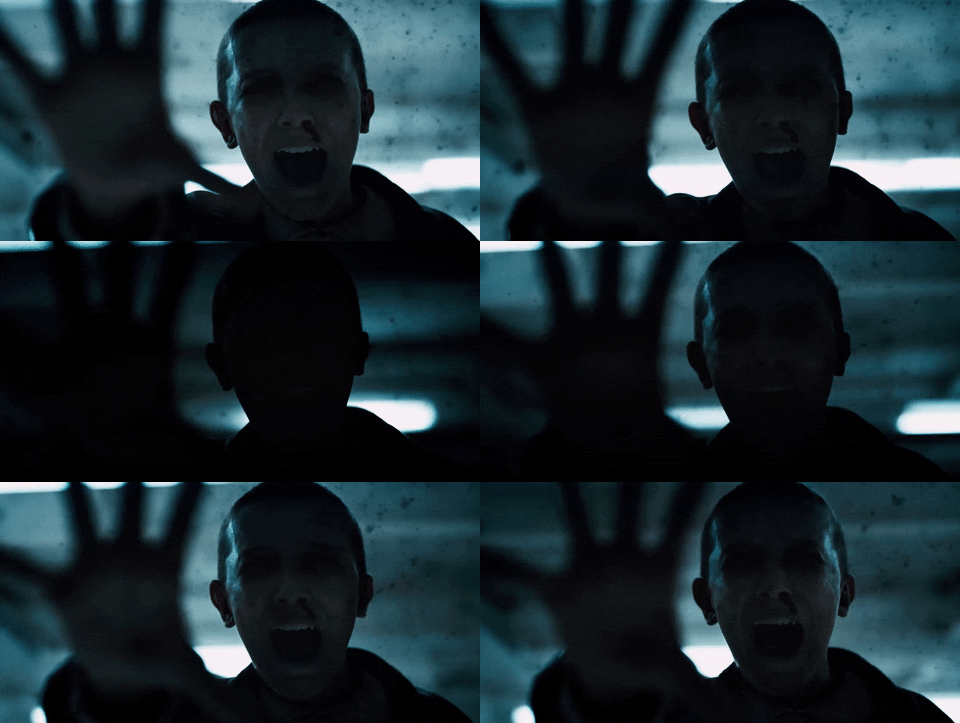
Below is the intro to the Netflix series Stranger Things. It is relatively minimalist, as far as opening titles go. However, it contains some of the conventions we would expect to see in a title; the production company, the actors' names, the executive and co-executive producers, and the name of the show. It is also a good example of using codes to create an atmosphere. The show fits comfortably into the genres of horror, mystery and drama, and the opening title presents this. Symbolic codes such as the black background (implying darkness) and red text (having connotations with blood and danger) suggest that the show is going to be frightening. The low, repetitive, mechanical-sounding music also creates intrigue and discomfort. These help the audience to infer the mood and genre of what they are about to watch.
Both technical and symbolic codes can affect how an audience interprets the rest of the film from the opening title. These include:
- Typography - how the text is presented can give clues to the setting or the genre
- Colour palette - the colours used often set the tone of the show/film
- Imagery - how video footage, still images, animation, etc. are used can give viewers an idea of the target demographic for the show/film
- Editing and Camera Movement - these can affect the sense of pace in an opening title
- Lighting - how dark or light an opening is can build or detract tension
- Music - theme tunes and soundtracks can tell an audience a lot about a film; where it's set, what genre it is, and even the exact film itself, if the music becomes iconic enough

No comments:
Post a Comment